
Make Your Own Vegan Kimchi At Home
By Tiffy Cooks
A flavorful, super simple homemade vegan kimchi recipe perfect as a side dish, topping, or snack! I swear we finish every batch of this napa cabbage kimchi so fast, we have to make another right away! This spicy, tart homemade fermented cabbage is a great way to add some probiotics into your meal at a super low price. If you're struggling to find tasty vegan side dishes, or you just enjoy making kimchi at home from scratch like me, this Vegan Kimchi is the recipe for you!
Equipment
Ingredients
- 1 Napa Cabbage 3–4 lbs
- 1/2 cup coarse sea salt or kosher salt for salting the cabbage
- 1 Carrot julienned (about 1 cup)
- 1 Daikon julienned (about 1 cup)
- 4-5 stalks chives or green onions cut into 1-inch pieces
Kimchi Paste
- 1 Asian pear or apple, peeled and chopped
- 1/2 yellow onion peeled and chopped
- 18-20 cloves garlic peeled
- 1 inch ginger peeled and chopped
- 1 cup gochugaru Korean chili flakes; adjust for spice level
- 1.5 tablespoons miso paste or vegan fish sauce optional
- 1/4 cup rice flour
- 1 cup water
Instructions
- Cut the Napa cabbage into quarters lengthwise, rinse thoroughly, and place in a large bowl.
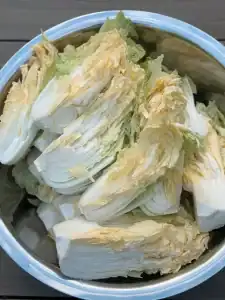
- Sprinkle the salt evenly over every layer of the cabbage, tossing to coat. Let sit for 1–2 hours with a weight on top, tossing every 30 minutes. The cabbage should soften but remain slightly crunchy. You’ll know it’s ready when the leaves bend easily.
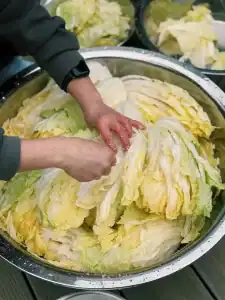
- Rinse the cabbage 2–3 times under cold water to remove excess salt, then drain well. Gently squeeze to remove excess water. The cabbage should taste slightly salty and crunchy.

- In a small pot, combine the rice flour and water. Whisk until smooth, then cook over medium-high heat, stirring constantly, until the mixture thickens and becomes slightly translucent (about 4–5 minutes). Set aside to cool for 30 minutes.
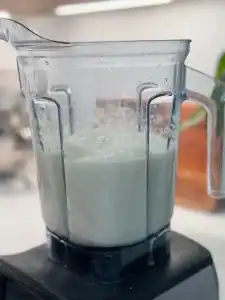
- In a blender or food processor, combine the Asian pear, onion, garlic, ginger, gochugaru, and miso paste. Blend until smooth. Adjust chili flakes to your preferred spice level.

- In a large bowl, mix the cooled rice flour paste, blended mixture, carrots, daikon, and chives until well combined.

- Wearing gloves, gently massage the paste into each cabbage leaf, ensuring all layers are evenly coated.

- Fold the cabbage leaves inward to seal in the paste and set them aside.

- Pack the coated cabbage into a clean, airtight glass jar or container, pressing it down firmly to remove air pockets. Leave about 1 inch of space at the top for expansion during fermentation.

- Seal the container and let it ferment at room temperature for 1–2 days, "burping" the jar daily to release gas. Taste daily to monitor tanginess.
- Once fermented to your liking, transfer the kimchi to the refrigerator to slow fermentation. It’s ready to eat but will continue to develop flavor over time.
