Reverse Sear: Perfectly Cook A Thick Steak
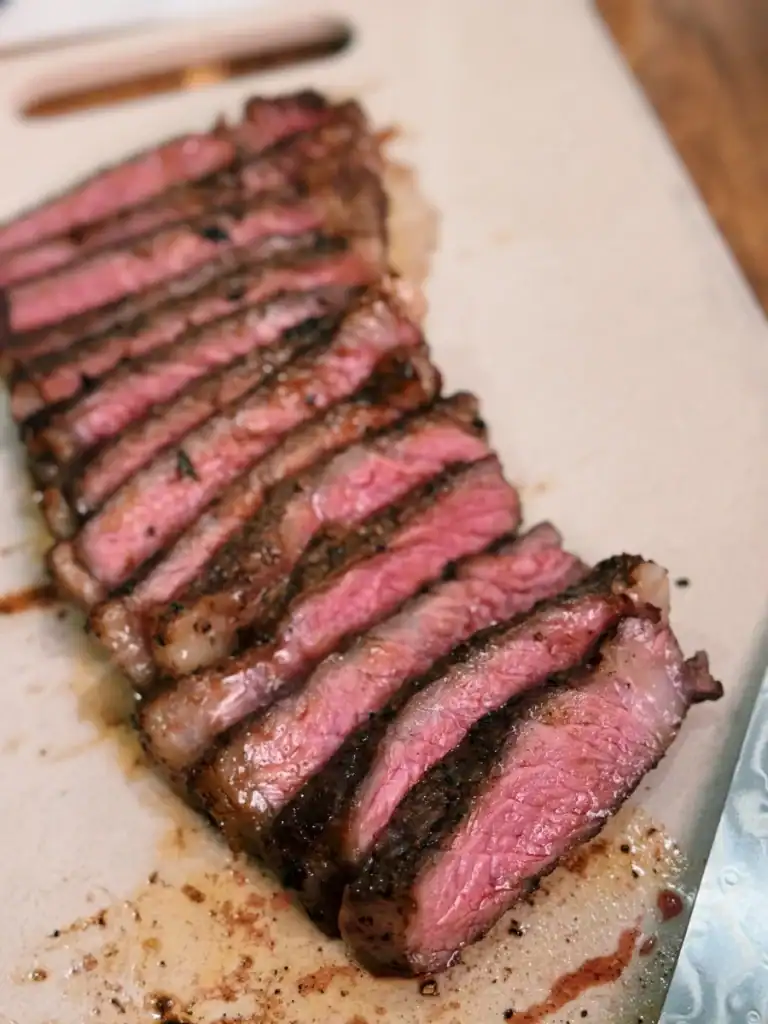
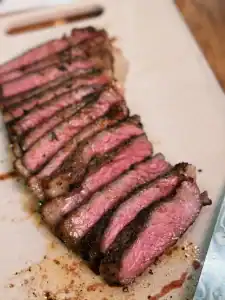
When it comes to a thicker cut of steak, reverse sear is the way to go! Using this reverse sear method, I get even cooking, a tender texture, and a super flavorful crust on my steaks without any stress at all. Whether I’m cooking many steaks for a group dinner, or need one perfect steak for date night, reverse searing is the method I use to make sure it comes out restaurant-quality every single time.

Hey there! Just so you know, some links on this page are affiliate links. That means if you click and buy something, I earn a tiny commission, at no extra cost to you. It’s a great way to support Tiffy Cooks and keep our kitchen cooking. Thanks for the love!
Reverse Sear Steak Ingredients
- 1 thick-cut ribeye steak ~16.5 oz, about 1.5–2 inches thick
- 1-2 tbsp olive oil or neutral oil
- Kosher salt to taste
- Freshly ground black pepper to taste
- Garlic cloves, rosemary, butter, and other add-ons for basting during the sear, Optional
What is Reverse Searing?
I got this thick 16.5 oz Costco ribeye steak today and I think reverse searing it is the way to go. Burning the outside of the steak only to find the inside raw is heartbreaking, and this method gives you that restaurant-quality crust with your perfect level of doneness.
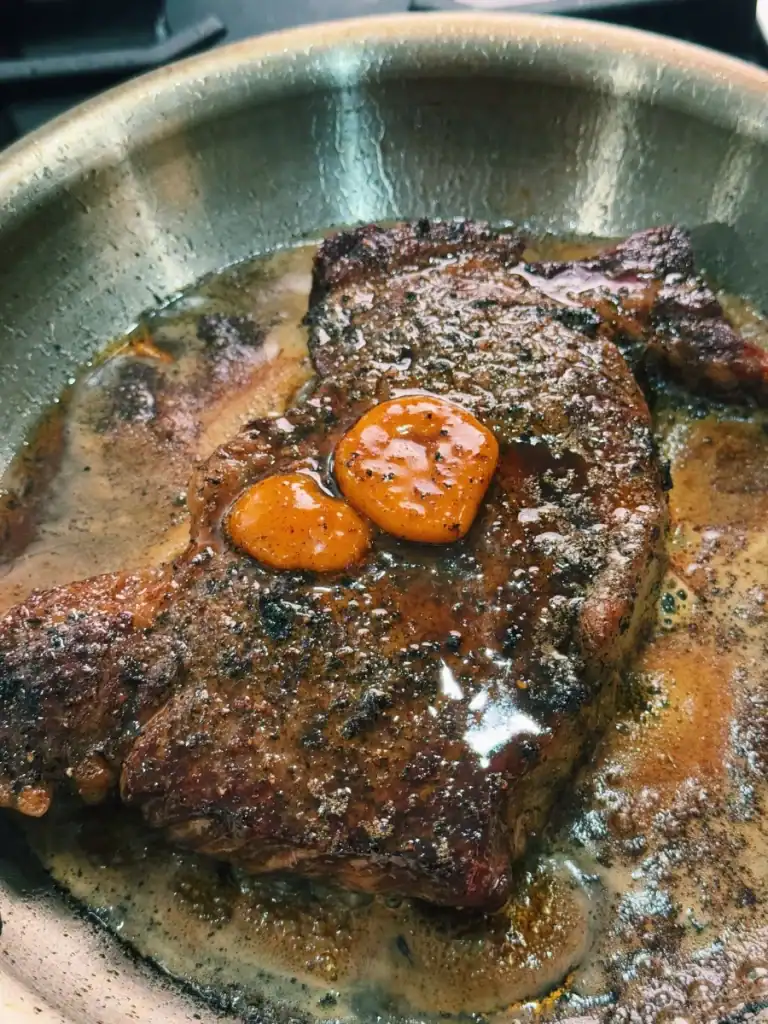
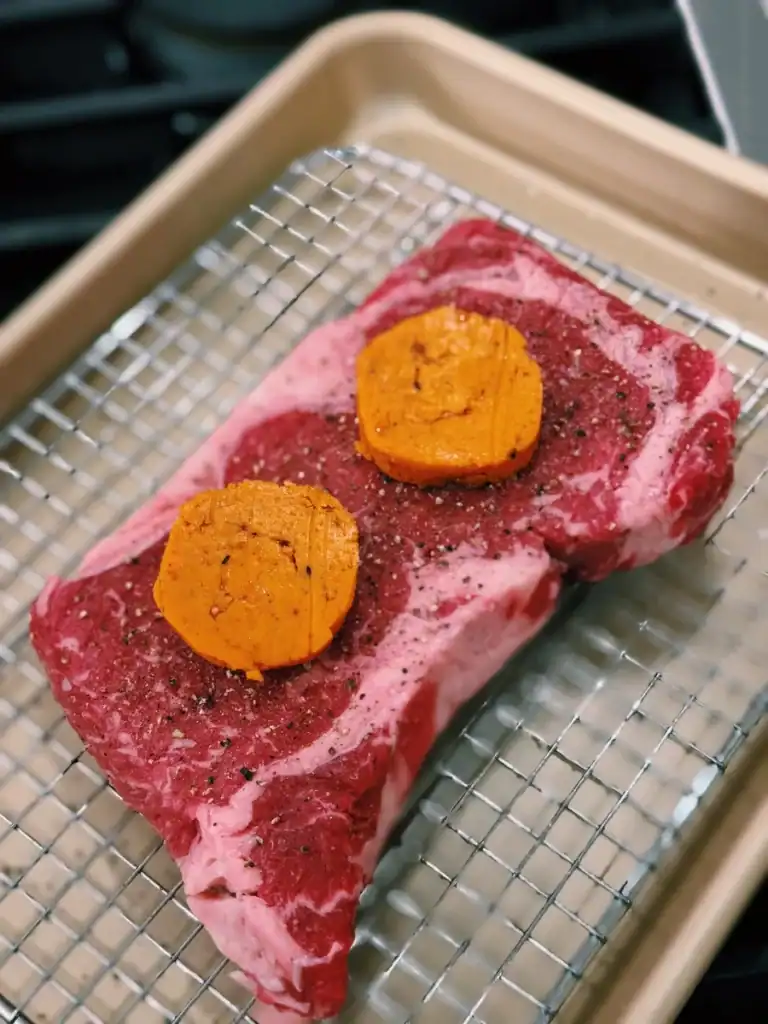
Nothing goes better with steak than fancy butter, and I have a little bit of leftover Gochujang Compound Butter from my recent Salmon recipe instead of normal butter to baste my steak! It adds a deliciously rich, spicy flavor.
Reverse Searing VS Traditional Searing
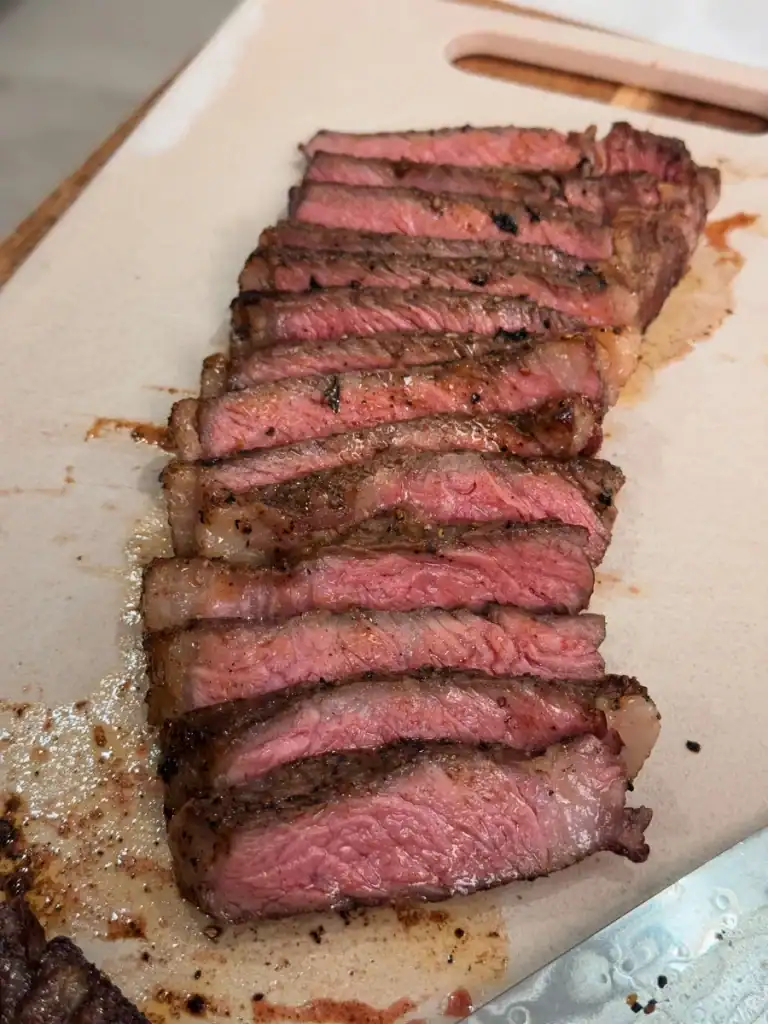
Reverse searing is a method of cooking thicker cuts of steak or meat to make sure that the steak is properly cooked every time. You first cook the steak in a lower temperature in the oven, before finishing it off with a sear in a pan.
- Even Cooking: Reverse searing heats the steak slowly at a low temperature. Traditional searing on a hot pan can quickly burn the super thick steak while leaving the insides raw.
- Many Steaks At Once: If I’m hosting, reverse searing lets me cook several steaks at once. With traditional searing, I have to sear all the super thick steaks one at a time, which will take a long time.
- Reliable Results: It’s so much easier to reach desired doneness—whether it’s rare, medium-rare, or well-done—exactly as we like every time.
- Juicer Steak: Gentle, slow cooking seals the liquids inside the meat, making the steak juicier.
When Should I Be Reverse Searing My Steak?
When do I reverse sear my steaks? I don’t use the reverse searing technique all the time to make my steak. In fact, Dom loves cooking steak with the traditional searing method. I also love Air Frying my steak!
However, this method works best for steaks that are thicker than 1.5 inches, or when you’re cooking many steaks at a time. The low temperature oven cooking slows down the overall cooking time, making it easier to control how well done your steak is without overcooking. When you’re cooking many steaks, you can roast all the steaks in the oven at once, and sear individually.
Equipment For Reverse Searing
To reverse sear your steaks, you’ll need a few items you probably already have in your kitchen:
- Meat Thermometer or instant-read thermometer: Using a thermometer makes sure that you can keep the steak at the right temperature while reverse searing. No overcooking or undercooking!
- Baking sheet with wire rack: Roasting the steak in the oven with a baking sheet and wire rack makes sure that all the excess fat drips down into the pan. This helps prevents the surface from cooking too fast in the fat, causing a burnt steak with a raw middle.
- Cast iron skillet or heavy-bottomed pan: Finish the reverse sear process with a pan searing from a cast iron skillet or a heavy-bottom pan.
Step-by-Step Guide to Reverse Searing
- Remove the steak from the fridge 30–60 minutes before cooking to bring it to room temperature.
- Pat the steak dry and season generously with kosher salt and freshly ground black pepper.
- Preheat the Oven to 225°F (107°C).
- Place a wire rack on a baking sheet and position the steak on the rack. Insert a meat thermometer into the thickest part of the steak.
- Roast in the oven until the steak reaches your desired pull-from-oven temperature (8°F below your final target temperature)
- Heat a cast iron skillet over high heat until it’s smoking hot. Add 1–2 tablespoons of oil.
- Sear the steak for 30–60 seconds per side, pressing lightly for even contact. Don’t forget to sear the edges as well.
- Optional: Add butter, garlic, and rosemary for basting while searing.
- Transfer the steak to a cutting board and let it rest for 5–10 minutes to allow juices to redistribute.
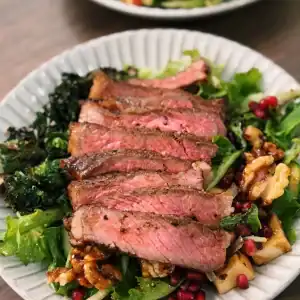
- Slice against the grain and serve immediately.
| Doneness | Pull from Oven Temp | Final Temp (After Sear) | Approx. Oven Time |
| Rare | 107°F (42°C) | 125°F (52°C) | ~20–25 minutes |
| Medium Rare | 112°F (44°C) | 130°F (54°C) | ~25–30 minutes |
| Medium | 122°F (50°C) | 140°F (60°C) | ~30–35 minutes |
| Medium Well | 132°F (56°C) | 150°F (65°C) | ~35–40 minutes |
- Times will vary slightly depending on the steak’s thickness and starting temperature.
Valentine’s Day Dinner is Easy with Date Night Recipes!



Reverse Sear Steak
By Tiffy Cooks
Equipment
- Cast iron skillet
Ingredients
- 1 thick-cut ribeye steak ~16.5 oz, about 1.5–2 inches thick
- 1-2 tbsp olive oil or neutral oil
- Kosher salt to taste
- Freshly ground black pepper to taste
- Garlic cloves, rosemary, butter, and other add-ons for basting during the sear, Optional
Instructions
- Remove the steak from the fridge 30–60 minutes before cooking to bring it to room temperature.
- Pat the steak dry and season generously with kosher salt and freshly ground black pepper.
- Preheat the Oven to 225°F (107°C).
- Place a wire rack on a baking sheet and position the steak on the rack. Insert a meat thermometer into the thickest part of the steak.
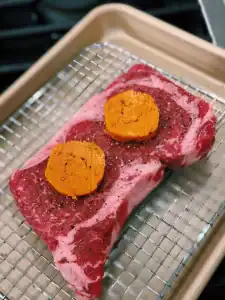
- Roast in the oven until the steak reaches your desired pull-from-oven temperature (8°F below your final target temperature). Check table below for more accurate timing.
- Heat a cast iron skillet over high heat until it’s smoking hot. Add 1–2 tablespoons of oil.
- Sear the steak for 30–60 seconds per side, pressing lightly for even contact. Don’t forget to sear the edges as well.
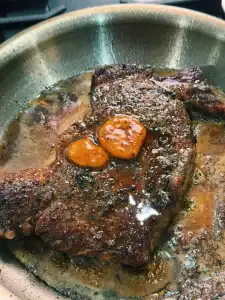
- Optional: Add butter, garlic, and rosemary for basting while searing.
- Transfer the steak to a cutting board and let it rest for 5–10 minutes to allow juices to redistribute.
- Slice against the grain and serve immediately.
Notes
| Doneness | Pull from Oven Temp | Final Temp (After Sear) | Approx. Oven Time |
| Rare | 107°F (42°C) | 125°F (52°C) | ~20–25 minutes |
| Medium Rare | 112°F (44°C) | 130°F (54°C) | ~25–30 minutes |
| Medium | 122°F (50°C) | 140°F (60°C) | ~30–35 minutes |
| Medium Well | 132°F (56°C) | 150°F (65°C) | ~35–40 minutes |